Cancún is the cheapest place in Mexico to fly to Cuba from, but as there's not much on offer there apart from the over-priced coastal resorts which are obviously not our thing, we only spent one night there before our flight. Thankfully we didn't have to organise visas before we went as we could just pay when we arrived at the airport in Havana (about US$20 each). We did, however, have to organise money beforehand as we weren't sure if either of our cards would work in the ATMs because they're both from American owned banks. So, we decided to play it safe and take Euros with us, which, along with Canadian dollars and Pounds Sterling, are the best currencies to take to exchange when you arrive. So armed with enough cash to last us our entire stay of 3 weeks, we were ready and raring to go.
We arrived in Havana and organised to share a taxi into town with a few Americans we'd met in the airport/on the flight. First of all though, we had to change some money to get us there. Cuba has two offical currencies: the Cuban Convertible Peso (CUC) and the Cuban Peso (CUP). One CUC = US$1 and is the main currency used for most purchases, and the CUP, also known as 'national money', is used for things like street food (one CUC = 24 CUP).

So, after we'd all changed enough money we made the rounds dropping people off at their various hotels. Except for us of course, as we hadn't made a booking which was our usual approach. We stopped off at one place we'd written down but unfortunately it was full, so we ended up having to go to the hotel Tom had booked, and ask about other options nearby. One of the hotel employees knew of a casa particular (like a B&B) a short walk away, and as it was getting dark we had no choice but to stay there. Of course we later found out that we paid more than we should have, but it wasn't too bad. Apart from hotels, the main accommodation option is these casa particulares, which are basically private homes where the families have any number of rooms for guests to stay in. We paid, on average, about $20 a night for our own room with bathroom, and they also offer meals at an additional price. We actually had our best meals at these casa's so once we discovered this we always paid the extra to be fed.
We wanted to start heading south/east straight away so we could get all the way to the other end of the country and back again, so we just spent one full day in Havana at the beginning. We basically just walked around a bit, along the waterfront taking photos of the grand old cars and checking things out. We also met up with the Americans for a drink at the famous Hotel Nacional de Cuba, which is a landmark in the capital city and played to host to a long list of famous people back in the day. We decided to come back at the end of the trip though and spend another couple of days looking around a bit more, so with that in mind we set off for Playa Larga.
 |
| Hotel Nacional de Cuba at night |

 |
| Hotel Nacional de Cuba |
 |
| Entrée and side dishes |
 |
| Lobster |
 |
| Delicious crocodile |


Cienfuegos literally means 'one hundred fires', but it's also known as the Pearl of the South. It's quite a pretty city but to be honest, none of us were overly enamoured by it. We just walked around for the day checking things out, but we unanimously agreed to move on again the following day.


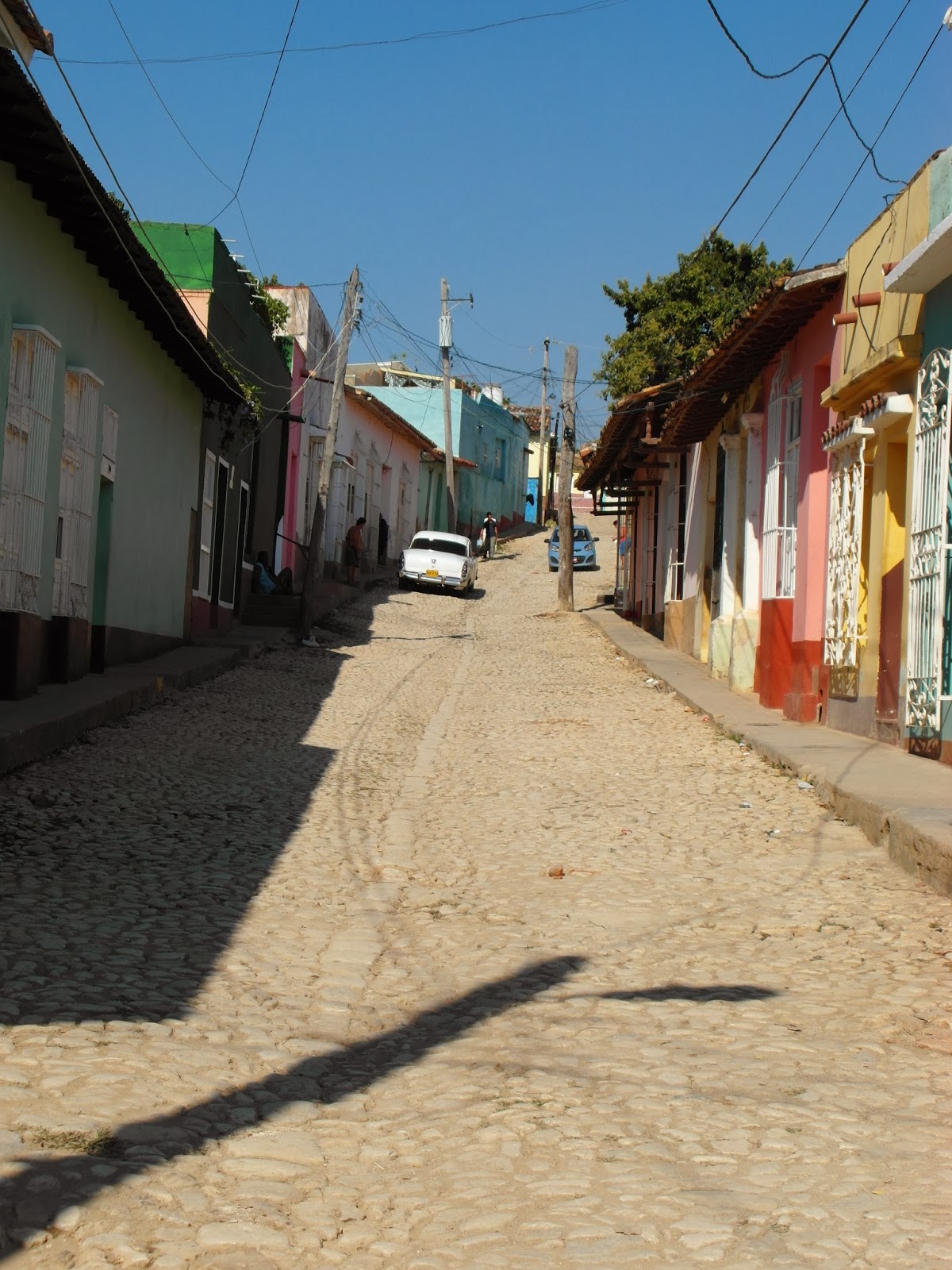
Trinidad is a few hours down the coast from Cienfuegos and is one of the most popular places to visit. Like most cities/towns in Latin America, there's a main plaza, some churches and other cool buildings, and the streets are mainly uneven, ankle-spraining cobblestones. Pretty, but not very practical if you like to wear heels. Or run, or ride a bike comfortably. Most attractions, however, are out of town, and of course there are a myriad of tours to choose from to take in the waterfalls and hiking etc. Or, you can just rent a couple of dodgy old bicycles and ride out to the beach like we did. We went to Playa Ancon as it's a beautiful long stretch of white sandy beach. However, because there are a couple of huge hotels/resorts, there were touts roaming all along trying to sell stuff and wanting us to pay to park our bikes. So we said shove it and found another smaller little bay where we could hide our bikes behind trees and swim without being hassled. Problem solved. Again, a couple of nights was sufficient so next stop was Camaguey. Which, to be honest, is a bit of a nothing town (for us anyway), so we only spent a night there to break up the trip down to Santiago de Cuba. And that's pretty much all I have to say about that.
 |
| Playa Ancon |

 |
| View from the roof of our casa |

 |

 |
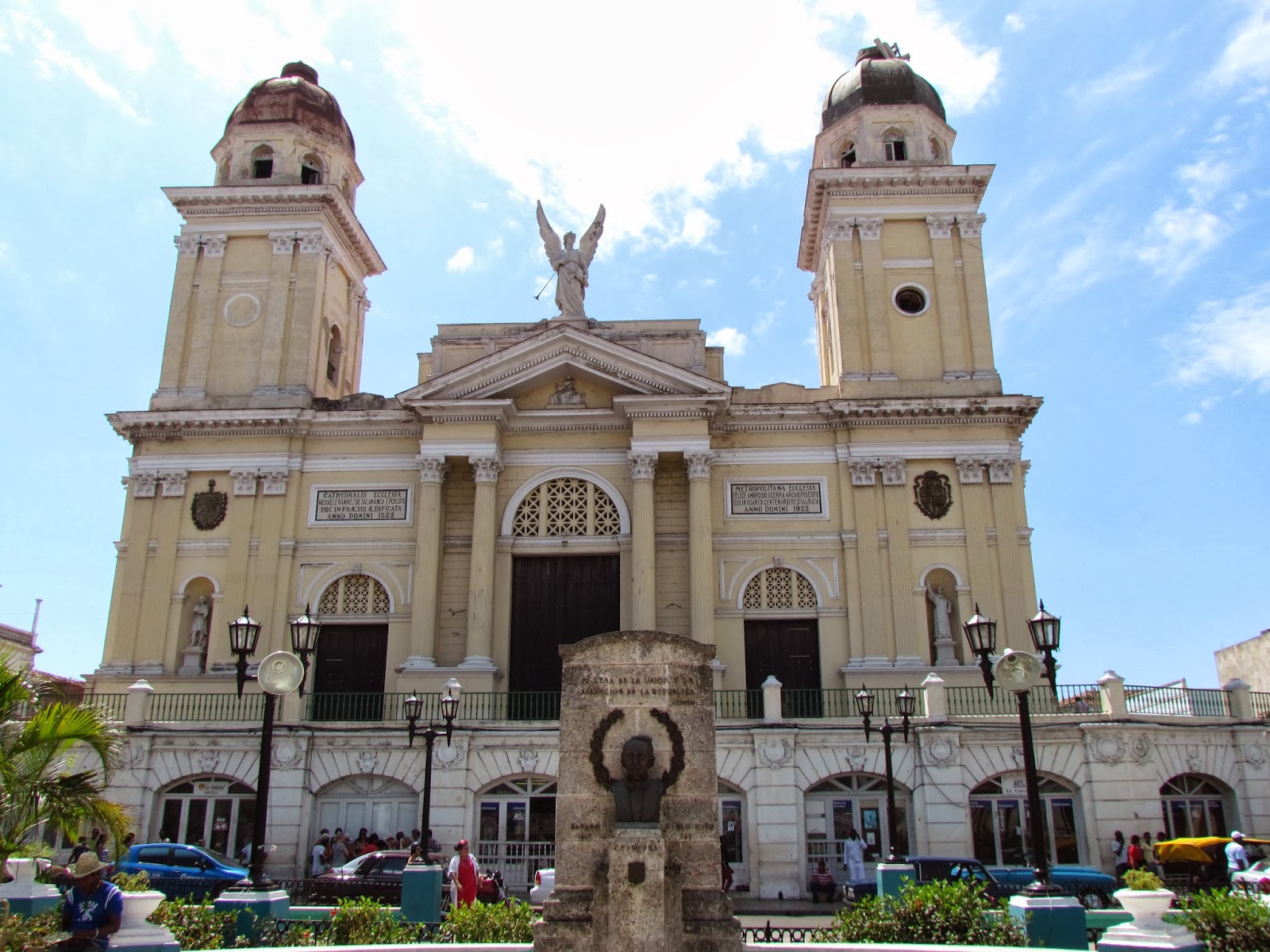
| Bullet holes in a school |


But one of the most random tourist things we've ever done, was visit the nearby Valle de la Prehistoria (Prehistoric Valley). It's a trippy place where you walk around amongst dozens of life-sized models of dinosaurs, prehistoric creatures and cave-men, engaged in various scenes of battle and other social activities. It's a crazy, hilarious way to spend a couple of hours, and a totally unexpected departure from the usual sightseeing stuff.


From Santiago de Cuba we made an overnight trip to the small coastal town of Baracoa on the southeastern tip of the country. It's the kind of place most people go to just wander around the town and chill out, which is what we did. And enjoy some more delicious seafood of course.


The main thing we wanted to do in that region of the country though, and what Kurt was most looking forward to, was to visit the Comandancia la Plata in the Sierra Maestras, where Che and Fidel had their jungle hideout during the revolution. It was from here that they launched their guerilla attacks against the opposing forces. It was a relatively short and easy walk to the encampment where we could check out the buildings scattered around, like the check-point hut, Fidel's house and the Rebel Radio base. It was in beautiful surroundings, but it would have been an absolute bitch having to trek in and out on a regular basis. I'm sure it would have been much wilder and overgrown than what we saw too.


 |
| Fidel's house |

Next up was Santa Clara, which is a pretty big University city. It's also where the last battle in the Cuban Revolution took place in 1958, when Che's men bulldozed the railroad tracks and derailed a train full of opposing soldiers and their supplies, and later captured the entire city. They still have a few carriages of the actual train set up for people to visit and walk inside, to see what it might have looked like and the guns and supplies it contained. They also have a big yellow bulldozer prominently and proudly displayed, but I'm not sure if this is the original one. Che Guevara's Monument and Mausoleum is also in Santa Clara, which is where Che's remains, along with those of 16 of the men he was with in Bolivia when the CIA killed them. Another thing we did was a tour through a cigar factory, which is the only way you can go inside. It was really interesting to see all the different stations for different tasks in the process, like how they roll them to a specified thickness, cut and package them, all at lightening speed. There was a mixture of men and women working there, but I'd say mostly women. Of course while we were in Cuba Kurt did buy a couple of authentic Cuban cigars - it had to be done really.


Before we returned to Havana, we had one more stop to make. Viñales is a small town a few hours west of Havana, and is located in a valley surrounded by low mountain ranges. It's quite a spectacular setting and is a big agricultural area, mainly tobacco. One day we hired shitty bicycles again and decided to ride to a nearby cave. However, they wanted to charge us too much to 'park' our bikes and the entry fee, so we got the shits on principle and rode on. We ended up riding out to a beach/port town which was much, much further than we expected - over 50kms round trip which resulted in rather sore asses and legs. Every time we rented these crappy bikes we vehemently resolved to never do it again, but we repeated this mistake several times. Gluttons for punishment I guess. The other thing we did in Viñales was a horse riding tour through the vast tobacco fields around the base of the mountains. We stopped at one farm and saw the tobacco leaves hung up in their thousands to dry, and even tried some freshly rolled tobacco which was really strong. Then we went into a cave where there was a natural pool inside which was quite cool. While it was great to be in these beautiful surroundings, we were disgusted at the condition of the horses we were riding. They were so skinny and malnourished we almost didn't get on them, and we wish we hadn't. We saw plenty of other groups and their horses were beautiful, gleaming and well-fed animals, so we felt like punching our guide in the face because he obviously didn't treat them well. When we finished we almost yelled at the guy to go and feed and water the poor horses, but who knows if he did.


 |
| Drying tobacco leaves |

And with that, our 3 weeks were nearly up, so we went back to Havana to properly explore the city. There is a lot of beautiful old architecture, particularly in Old Havana, and it's a great place to just walk around soaking up the atmosphere and getting snap-happy. Of course there's Plaza de la Revolución (Revolution Square), famous for the large images of Che Guevara and Fidel Castro on the side of buildings around the plaza. There's also a huge monument to José Martí, the national hero of Cuba. We had a great host in our casa particular in Havana, and we were able to have a few rums and a conversation with her elderly father, who'd been in the Cuban army. Cubans tend to be quite guarded in their conversation, but this old dude was really cool and was happy to talk, which was really interesting to hear first-hand stories. It was a great way to end our trip, and while Cuba wasn't anything like the image either of us had in our minds of the country, nor was it a particularly easy country to backpack around, it was an interesting place to be. Especially to see it all now before it quite possibly opens up and changes completely.


